Quick Answers:
What Does GSM Mean in Clothing: GSM stands for Grams per Square Metre it measures how much a one-square-metre piece of fabric weighs in grams. The higher the GSM, the heavier, denser, and warmer the fabric.
Quick GSM reference for clothing brands:
- 150–180 GSM → lightweight t-shirts, summer basics.
- 180–220 GSM → quality everyday tees.
- 220–260 GSM → premium tees, structured fits.
- 260–320 GSM → sweatshirts, mid-weight hoodies.
- 320–400 GSM → premium hoodies, streetwear blanks.
- 400 GSM+ → ultra-heavy, luxury blanks.
For Embroidery: Minimum 280 GSM, ideally 320 GSM+
For Digital Printing: 180-250 GSM is the sweet spot
For Screen Printing: 180-300 GSM with a tight knit
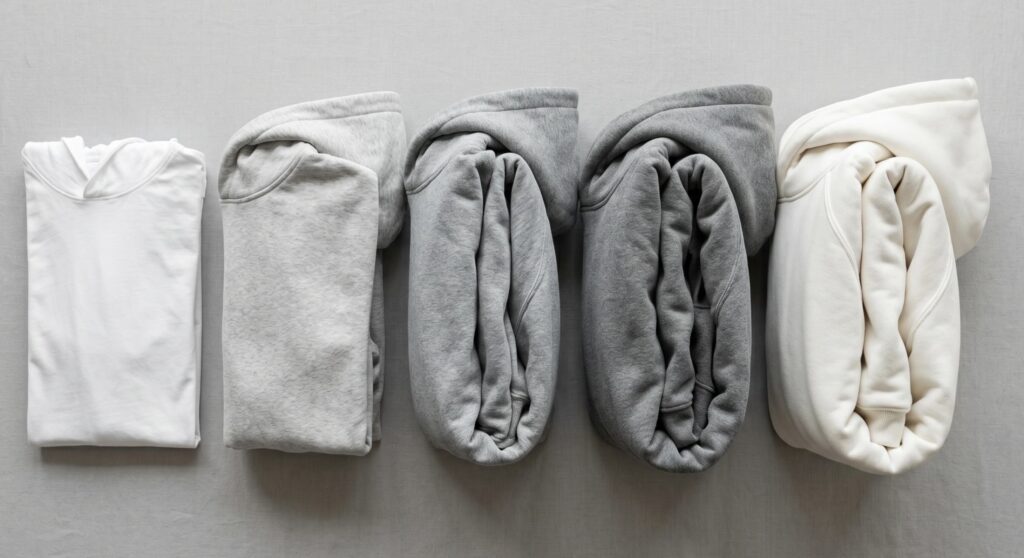
If you’ve ever ordered blank apparel and wondered what the GSM number actually means and why it matters this guide covers everything you need to know before you buy.
Not sure which GSM is right for your brand? Browse our range of premium blank hoodies, tees, and sweatshirts all selected for the right weight, fabric, and decoration-readiness. No minimum order. Ships across Australia. Shop Blank Clothing | Get a Custom Quote
Table of Contents
What Does GSM Stand For?
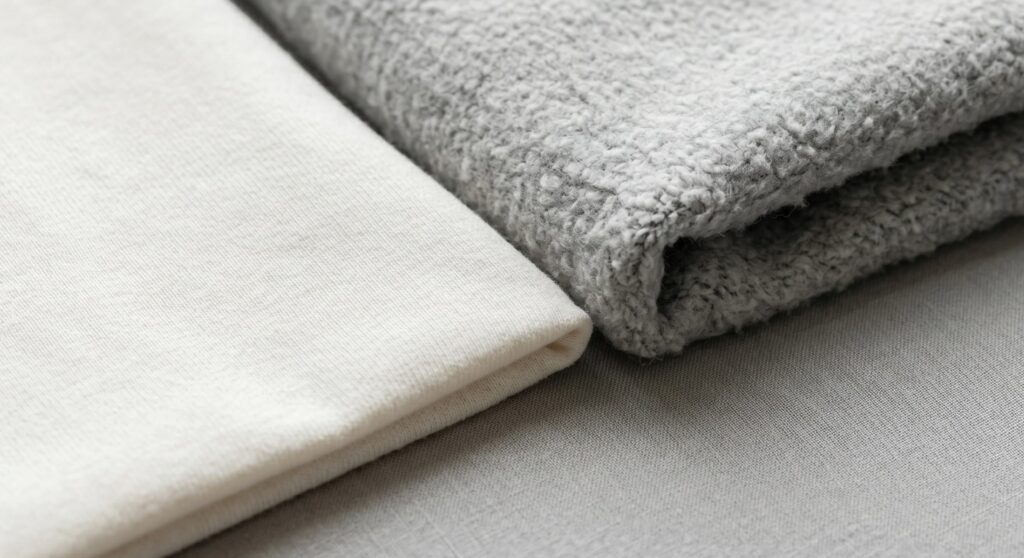
GSM stands for Grams per Square Metre. It measures how much a one-square-metre piece of fabric weighs in grams. The higher the number, the heavier and denser the fabric. The lower the number, the lighter and more breathable it is.
That’s the simple version. But GSM affects a lot more than just weight it determines how your garment feels, how it drapes, how well it holds embroidery or print, and how long it lasts.
GSM at a Glance: Quick Reference Table
| GSM Range | Weight | Typical Use |
|---|---|---|
| 120–150 GSM | Very lightweight | Promotional tees, singlets, summer basics |
| 150–180 GSM | Lightweight | Everyday t-shirts, warm-weather wear |
| 180–220 GSM | Mid-weight | Quality tees, polos, casual shirts |
| 220–260 GSM | Medium-heavy | Premium tees, long sleeves, structured fits |
| 260–320 GSM | Heavy | Sweatshirts, quality hoodies |
| 320–400 GSM | Premium heavy | Thick hoodies, streetwear, structured blanks |
| 400 GSM+ | Ultra-heavy | Luxury blanks, heavyweight fashion pieces |
What GSM Should You Choose for Each Garment?
T-Shirts
For everyday branded tshirts, 180–220 GSM is the sweet spot. It’s heavy enough to feel premium but light enough to wear comfortably in Australian summers. If you’re creating a streetwear or oversized fit, 220–260 GSM gives more structure and holds its shape better. Anything below 160 GSM will feel thin and promotional fine for one-use event merch, but not suitable for a brand you want to stand behind.
Hoodies
Most mid-market hoodies sit in the 300–380 GSM range. Budget hoodies can be as low as 250 GSM, and premium heavyweight hoodies often exceed 400 GSM. If you’re building a clothing brand, aim for 320 GSM minimum it’s the threshold where a hoodie starts to feel substantial and justify a premium price point. Our blank hoodies are selected specifically within this range.
Sweatshirts
Similar to hoodies, 280–360 GSM is ideal. French Terry and loopback cotton constructions at 300–360 GSM give you that classic, structured sweatshirt feel without being too heavy for Australian spring and autumn weather.
Quarter Zips
Quarter zips are typically worn as a mid-layer, so 280–340 GSM works well. Heavy enough to add warmth, light enough to layer under a jacket.
How GSM Affects Printing and Embroidery
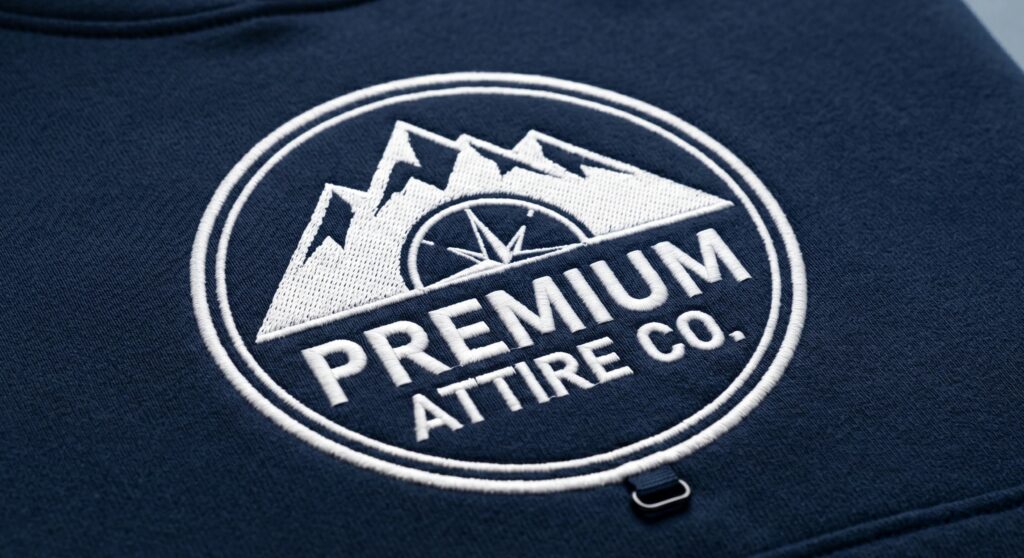
This is where GSM really matters for clothing brands, because the decoration method you choose needs to match the fabric weight.
GSM for Embroidery
Embroidery is the most demanding decoration method in terms of fabric weight requirements. Thread stitched under mechanical tension will pucker, distort, or even tear lightweight fabrics. As a general rule:
- Minimum 200 GSM for small chest logos
- 280 GSM or above for larger or denser designs
- 300–380 GSM is the ideal range for hoodie embroidery
For custom embroidery services, always go heavier than you think you need. You’ll get a cleaner stitch, better thread tension, and a finish that holds after washing.
GSM for Digital Printing
Digital (DTG) printing performs best on smooth, tight-knit fabrics in the 180–250 GSM range. The surface needs to be dense enough to hold ink without bleed-through, but not so textured that it disrupts print sharpness. Our digital printing services work best on garments in this range. Very heavy fabrics can actually reduce print clarity on certain finishes.
GSM for Screen Printing
Screen printing works well across a wider GSM range 180–300 GSM as long as the knit is tight and the surface is smooth. Mid-weight fabrics with a dense cotton knit are the most reliable.
GSM and Australia's Climate - What to Consider
Australia’s climate varies more dramatically than almost any other country from Darwin’s year-round tropical heat to Melbourne’s cold winters and Hobart’s near-freezing temperatures. That variation should directly inform your GSM choices when ordering blank clothing wholesale in Australia.
If you’re ordering one range to cover the whole country, 180–200 GSM for t-shirts and 300–360 GSM for hoodies is a reliable all-rounder. If you’re stocking for a specific region, go lighter for Queensland and Northern Territory, and heavier for Victoria, Tasmania, and Southern New South Wales.
Does Higher GSM Always Mean Better Quality?
Not automatically. GSM measures weight, not construction quality. A 320 GSM fabric made from low-grade cotton with a loose weave can feel heavy but still pill quickly, lose shape, or fade. A well-constructed 200 GSM fabric with strong fibre and tight knit can outlast it easily.
GSM is one part of the equation. Fibre content, knit structure, and finishing all matter too. At No.64, we select blanks based on all four, not GSM alone.
FAQ
What is a good GSM for a hoodie?
For a quality branded hoodie, 320-380 GSM is the recommended range. It feels substantial, holds embroidery cleanly, and justifies a premium retail price.
What is the difference between 180 GSM and 220 GSM t-shirts?
A 220 GSM tee feels noticeably thicker and more structured. It’s better for cooler months, boxy fits, and decoration methods like printing and embroidery. A 180 GSM tee is better for warm weather, casual wear, and lower-cost runs.
Is higher GSM always warmer?
Generally yes — denser, heavier fabric retains more heat. But fibre type also matters. A 280 GSM merino wool will feel warmer than a 350 GSM cotton blend.
What GSM is best for embroidery?
A minimum of 280 GSM, and ideally 320 GSM or above for chest and sleeve embroidery on hoodies and sweatshirts.