Quick Answers:
If I had to choose quickly:
- Digital Printing (DTG) is best for small orders and detailed designs with many colors.
- Screen Printing is best for bulk orders with simple, bold graphics.
- Embroidery is best for premium branding, logos, and long-lasting apparel.
The right choice depends on your budget, design complexity, and brand image.
Table of Contents
Introduction - Why Choosing the Right Printing Method Matters
I’ve seen brands spend thousands on custom apparel, only to end up with products that don’t match their identity. The printing method you choose directly affects how your brand is perceived.
A clean embroidered logo signals premium quality and professionalism. A bold screen print gives off a strong, scalable brand presence. A digital print allows for creative freedom and fast experimentation.
This decision is not just about decoration—it’s about brand positioning, customer perception, and long-term value.
What Is Digital Printing (DTG)?

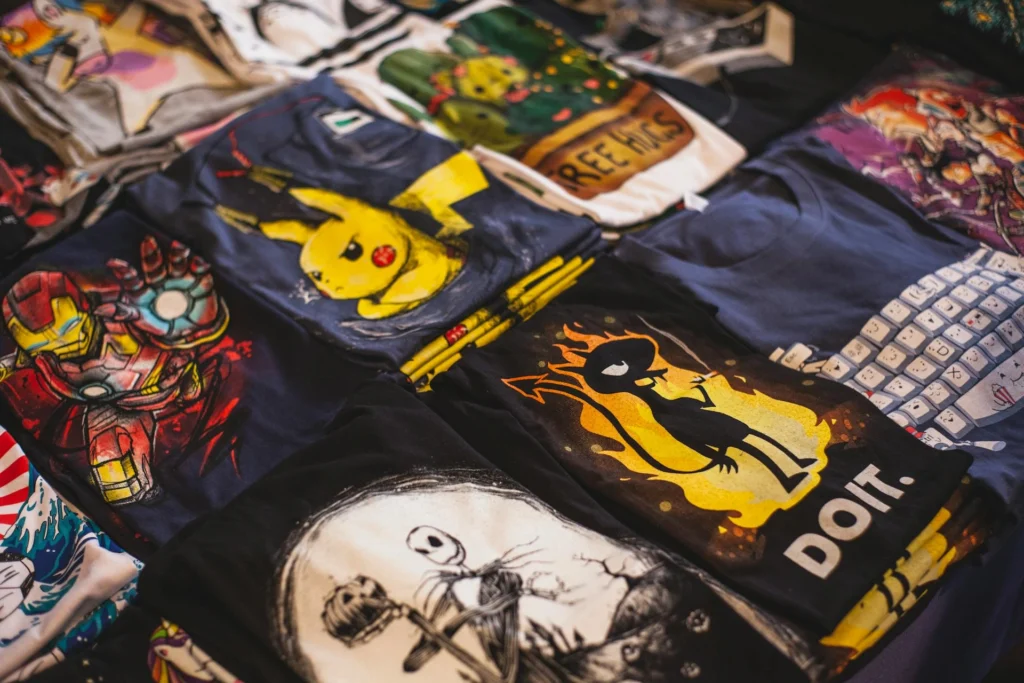
Digital printing, also called Direct-to-Garment (DTG), is one of the most advanced methods used in modern apparel customization. I like to think of it as a highly specialized inkjet printer – but instead of paper, it prints directly onto fabric.
The key difference is that DTG doesn’t just sit on top of the fabric. The ink actually absorbs into the textile fibres, especially in cotton garments. This creates a soft, breathable finish that feels almost like part of the fabric itself.
How Digital Printing Works:
The design is processed through software and printed directly onto the garment using water-based inks. It works best on cotton fabrics, where the ink can fully absorb.
Pros of Digital Printing:
- Unlimited colors, gradients, and fine details
- No setup costs, making it ideal for low quantities
- Quick turnaround times
- Perfect for photorealistic or complex artwork
Cons of Digital Printing:
- Less durable compared to embroidery
- Colors may fade over time with repeated washing
- Higher cost per unit for bulk orders
Best Use Cases:
I recommend DTG for:
- Startups testing new designs
- Limited edition drops
- Artwork-heavy streetwear
- Print-on-demand businesses
READ MORE: How to Start a Clothing Brand in Australia (2026 Guide)
What Is Screen Printing?
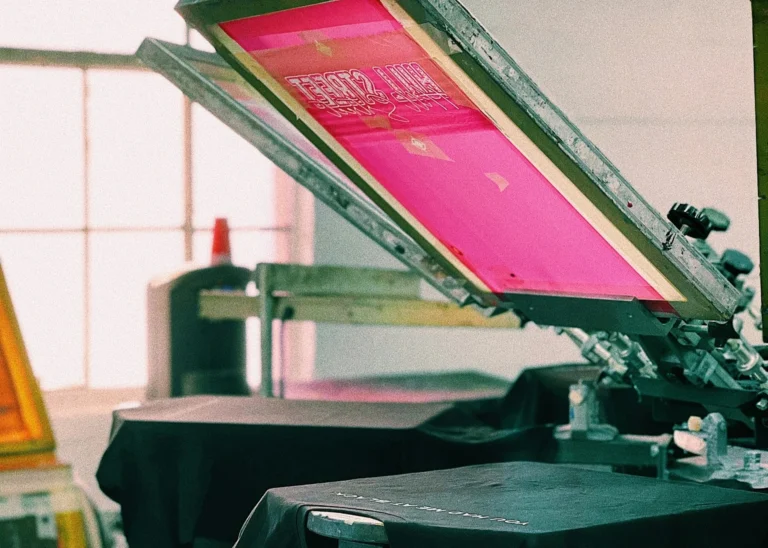
Screen printing, also known as silkscreen printing, is one of the oldest and most trusted methods in apparel decoration and for good reason. It has stood the test of time because it delivers consistent, durable, and high-quality results, especially for large-scale production.
At its core, screen printing is a stencil-based printing technique. Ink is pushed through a fine mesh screen onto the fabric, layer by layer, to build the final design. Each color in the design is applied separately, which is why this method is best suited for bold, simple graphics rather than complex, multi-color artwork.
How Screen Printing Works:
Ink is pushed through a stencil (screen) onto the fabric. Each color requires a separate screen, making the process more complex but highly consistent.
Pros of Screen Printing:
- Extremely durable prints
- Cost-effective for large orders
- Bold and vibrant color output
- Works on a wide range of fabrics
Cons of Screen Printing:
- High setup cost due to screen preparation
- Limited color flexibility
- Not suitable for highly detailed or gradient designs
Best Use Cases:
From experience, screen printing works best for:
- Bulk uniform orders
- Event merchandise
- Corporate giveaways
- Scaling fashion brands
What Is Embroidery?
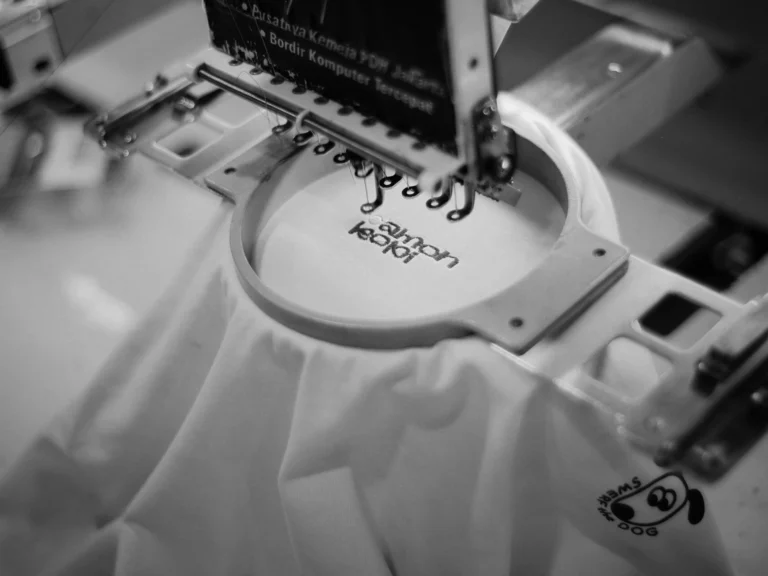
Embroidery is a textile decoration method where designs are stitched directly into the fabric using thread instead of ink. Unlike printing techniques, embroidery creates a raised, tactile finish that adds depth, texture, and a sense of craftsmanship to the garment.
I often describe embroidery as the difference between something that looks printed and something that feels built into the garment. It doesn’t just sit on the surface, it becomes part of the fabric structure itself.
How Embroidery Works:
Digitized designs are fed into embroidery machines, which stitch the logo using threads. The complexity depends on stitch count and density.
Pros of Embroidery:
- Highly durable and long-lasting
- Premium, textured finish
- Does not fade like printed designs
- Ideal for professional branding
Cons of Embroidery:
- Limited detail for intricate designs
- Higher cost per piece
- Not suitable for large design areas
Best Use Cases:
I usually suggest embroidery for:
- Corporate uniforms
- Polo shirts and hoodies
- Caps and jackets
- Luxury or minimalist brands
Digital Print vs Screen Print vs Embroidery: Side-by-Side Comparison
| Feature | Digital Print (DTG) | Screen Print | Embroidery |
|---|---|---|---|
| Best For | Small runs | Bulk orders | Premium branding |
| Detail Level | Very high | Medium | Low |
| Durability | Medium | High | Very high |
| Cost (Small Qty) | Low | High | Medium |
| Cost (Bulk) | Medium | Low | High |
| Brand Perception | Creative | Bold | Premium |
Which Printing Method Is Best for Your Brand Type?
For Streetwear Brands:
I often combine methods here. DTG for artistic prints and screen printing for scaling designs.
For Corporate & Professional Brands:
Embroidery stands out. It builds trust and gives a polished look.
For Startups & Small Businesses:
Digital printing is the safest starting point. It reduces risk and upfront cost.
For Premium & Luxury Brands:
Embroidery dominates. It creates a tactile, high-end feel that printing cannot match.
Cost Breakdown - What You Actually Pay For
Understanding pricing helps avoid surprises.
- Screen Printing: Setup fees + number of colors
- Embroidery: Stitch count and design complexity
- Digital Printing: Flat rate per print
Garment quality also plays a huge role. A premium blank enhances the final output significantly.
Design Limitations You Must Know
Each method has constraints:
- Digital Printing: handles gradients and images well.
- Screen Printing: best for bold, simple graphics.
- Embroidery: best for logos and text.
Choosing the wrong method for your design can ruin the final result.
Common Mistakes Brands Make
I’ve seen these mistakes too often:
- Using embroidery for complex artwork
- Choosing screen printing for small runs
- Ignoring fabric quality
- Skipping sample testing
Avoiding these can save both money and reputation.
Can You Combine Printing Methods?
Yes, and this is where things get interesting.
A popular approach:
- Embroidered logo on the chest
- Screen or digital print on the back
This hybrid method creates depth and elevates brand identity.
Why Fabric Quality Matters More Than Printing Method
Even the best printing technique fails on poor-quality fabric.
Premium fabrics:
- Hold prints better
- Enhance embroidery appearance
- Improve customer satisfaction
In many cases, fabric quality matters more than the decoration method itself.
How to Choose the Right Method
Here’s how I simplify it:
- Small order + complex design → Digital Printing
- Large order + simple design → Screen Printing
- Premium branding → Embroidery
Final Verdict - What Should You Choose?
There is no universal winner.
If your goal is creativity and flexibility, go with digital printing.
If you want scalability and cost efficiency, choose screen printing.
If your focus is premium branding and durability, embroidery is the clear choice.
The smartest brands don’t just pick one—they use each method strategically to build a strong, lasting identity.
FAQ
Which lasts longer, screen print or embroidery?
Embroidery lasts the longest because it uses stitched threads instead of ink.
Is digital printing good for t-shirts?
Yes, especially for detailed designs and small batches.
Why is embroidery more expensive?
Because of stitch count, machine time, and precision work.
What is best for logos?
Embroidery for premium branding, screen printing for cost efficiency.
What Is the Difference Between Digital Print and Embroidery?
The main difference is ink vs thread.
- Digital printing (DTG) applies ink directly into the fabric, allowing detailed, colorful designs.
- Embroidery stitches the design using thread, creating a textured, high-end finish.