Quick Answers:
Embroidery stitches your design directly into the fabric durable, premium, best for logos on hoodies, polos, and caps (300 GSM+). Digital printing applies ink onto the fabric surface vivid, flexible, best for complex artwork on t-shirts (180–250 GSM).
Choose embroidery if:
You want a long-lasting premium finish, your logo is simple and defined, or you’re branding hoodies and uniforms.
Choose digital printing if:
Your design has gradients, photography, or many colours, or you’re decorating lightweight t-shirts. Both are available in-house at No.64 Apparel with no minimum order, shipping across Australia.
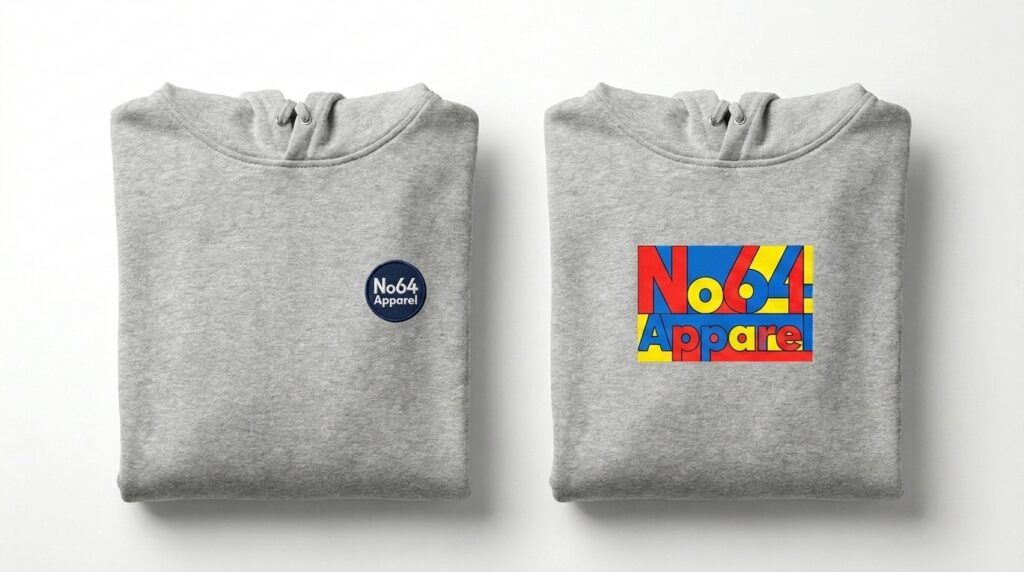
It’s one of the most common questions we get at No.64 Apparel: should I embroider my logo or print it? The honest answer is it depends on your garment, your design, and what you want your brand to communicate. This guide breaks down both methods across every key factor durability, cost, fabric compatibility, design complexity, and brand perception so you can make the right call with confidence.
At a Glance: Embroidery vs Digital Printing
| Factor | Embroidery | Digital Printing |
|---|---|---|
| Durability | Excellent, stitched into fabric | Good, can soften over time |
| Best for | Logos, wordmarks, crests | Complex graphics, gradients, photography |
| Fabric (GSM) | Best on 280 GSM+ | Best on 180-250 GSM |
| Finish | 3D, raised, textured, premium | Flat, smooth, vivid colour |
| Design complexity | Simple to moderate | Unlimited |
| Colour limit | Up to 15 thread colours | Unlimited |
| Cost per unit | Higher for large/dense designs | Lower for complex multicolour art |
| Setup cost | One-time digitising fee | No setup cost |
| Ideal garments | Hoodies, caps, polos, quarter zips | T-shirts, sweatshirts, tote bags |
| Brand perception | Premium, professional, craft | Modern, creative, fashion-forward |
| Turnaround | Slightly longer | Fast |
What Is Custom Embroidery?
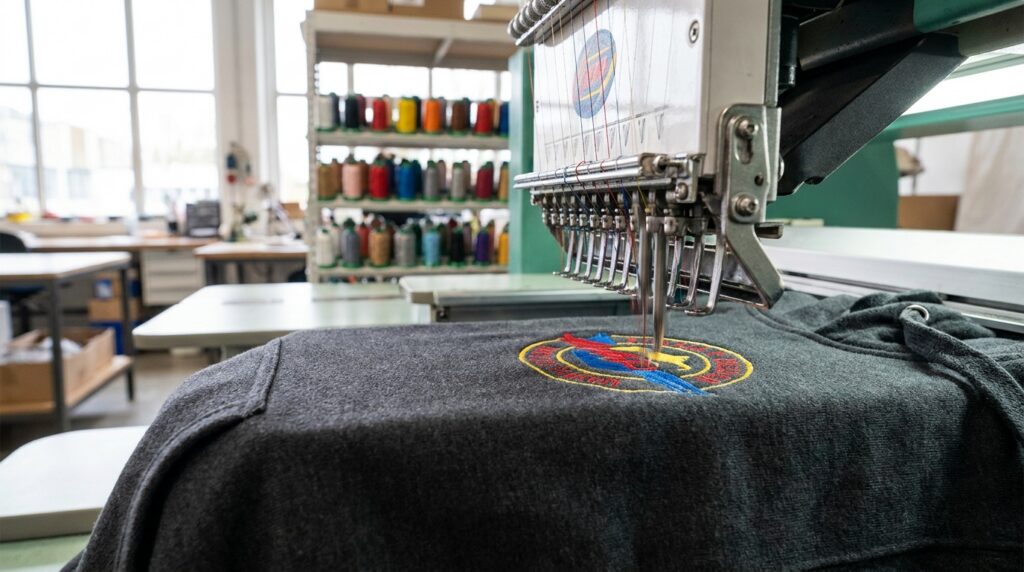
Embroidery uses high-strength thread stitched directly into the fabric using an industrial embroidery machine. Your logo is first digitized into a stitch file, which guides the machine to recreate it in thread resulting in a raised, textured finish that becomes part of the garment itself.
Because the design is sewn into the fabric rather than sitting on top, embroidery offers exceptional durability. It resists fading, peeling, and wear, even after years of regular washing.
More than just a decoration method, embroidery signals permanence, quality, and craftsmanship. That’s why it’s the preferred choice for premium streetwear, corporate uniforms, and luxury hospitality apparel around the world.
At No.64, our custom embroidery services are handled entirely in-house no outsourcing, no quality variation between runs.
What Is Digital Printing?
Digital printing also called DTG (Direct-to-Garment) works like an industrial inkjet printer. Water-based CMYK inks are applied directly onto the fabric surface, producing sharp, full-colour results with no colour limits and no setup screens.
It’s the fastest route from artwork file to finished garment, and it excels at reproducing complex designs that embroidery can’t easily replicate photography, gradients, illustrated artwork, and fine linework.
Our digital printing services are built for brands that want vibrant, detailed graphics on premium Australian-sourced blanks.
When to Choose Embroidery
You want a premium, long-lasting finish
Embroidered logos don’t peel, crack, or fade the way printed designs can. For a brand building long-term equity streetwear, corporate, hospitality, or workwear embroidery is the standard. The raised thread texture communicates quality before a word is spoken.
Your logo is simple and defined
Embroidery works best with solid shapes, clean lines, and a limited colour palette the kind of logo that reads clearly at small sizes. Corporate wordmarks, monograms, crests, and structured brand logos are ideal. Very fine text, thin lines, and photographic gradients are difficult to reproduce in thread and should be simplified for embroidery.
You’re decorating hoodies, caps, polos, or quarter zips
These heavier-fabric garments (300 GSM+) hold stitching flat and clean. The structured surface of a polo or the thick fabric of a premium blank hoodie is exactly what embroidery needs to perform at its best. Lightweight garments (under 200 GSM) can pucker under thread tension see our GSM guide for fabric weight guidance.
You’re building workwear, uniforms, or corporate apparel
Embroidery on uniforms communicates professionalism and holds up through the daily wear and frequent washing that corporate and trade garments face. The one-time digitizing fee means subsequent orders reproduce your logo identically every time crucial for brand consistency across a team.
You want city-specific branding in Australia
No.64 delivers custom embroidery in Sydney, Melbourne, Brisbane, Adelaide, and across Australia with fast shipping directly to your door, no minimum order.
When to Choose Digital Printing
Your design has complex artwork, photography, or gradients
Embroidery can’t reproduce photographic detail or smooth color transitions. If your brand identity relies on detailed graphics, multi-tonal artwork, or illustrated designs, digital printing is the only method that does it justice. No color limits, no compromises on detail.
You’re decorating t-shirts or lighter garments
Thinner fabrics (180–220 GSM) aren’t suited to embroidery thread tension causes puckering on lightweight knits. Digital printing sits flat on lighter garments without distorting the fabric. Our blank clothing range includes premium Australian-sourced tees in the 180–240 GSM range, all optimized for digital print.
You want fast turnaround on a small run
Digital printing has no setup costs and no minimum color charges, making it faster and more cost-effective for smaller quantities or one-off designs. If you need samples before a larger run, digital printing is the quickest path to a finished garment in hand.
You’re producing seasonal or limited-edition pieces
If your design changes frequently event merch, seasonal drops, limited runs, campaign pieces digital printing gives you the flexibility to update artwork without re-digitizing a stitch file. Pair this with our custom labelling and packaging services to create a complete, shelf-ready product.
Can You Use Both on the Same Garment?
Yes and many leading Australian clothing brands do. A common combination is a digitally printed back graphic (large, detailed, full-color) with an embroidered chest logo (small, premium, raised). This approach gives you the creative range of digital printing plus the premium finish of embroidery in a single garment.
It’s a strong option for streetwear labels and creative brands that want to communicate both craft and artistry. If you’re considering this approach, get a custom quote and we’ll advise on the best combination for your specific design and garment.
Which Is More Expensive?
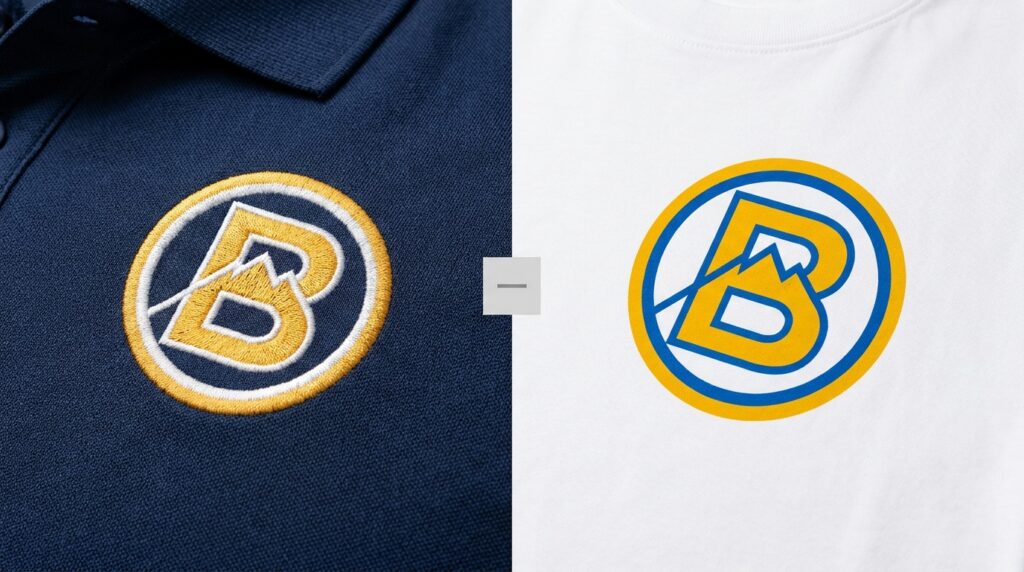
Neither is universally cheaper. Cost depends on design complexity, print or stitch size, and order quantity.
| Embroidery | Digital Printing |
Setup cost | One-time digitising fee | None |
Small simple logo | Very cost-competitive | Low |
Large, complex design | Higher (more stitches) | More economical |
Repeat orders | Same file, no extra cost | Repriced per run |
Best value at | Recurring orders, uniforms | One-off or small creative runs |
For simple logos on hoodies and polos, embroidery is very cost-competitive especially since the digitizing fee is a one-time cost. For large, full-color back prints, digital printing is typically more economical. Contact us and we’ll give you a side-by-side comparison for your specific project.
Embroidery vs Digital Printing, Related Reading
Not sure which method is right for your brand?
No.64 Apparel offers custom embroidery and digital printing entirely in-house consistent quality, no minimum order, and fast shipping across Australia.
Explore Embroidery | Explore Digital Printing | Get a Custom Quote
Frequently Asked Questions
Which lasts longer, embroidery or digital printing?
Embroidery generally lasts longer. Because the design is stitched into the fabric, it resists fading and wear even after years of washing. High-quality digital printing on premium blanks is also durable, but it sits on the fabric surface and can soften or fade over time, particularly with frequent or high-temperature washing.
Is embroidery better than digital printing for hoodies?
For chest logos and branded details on hoodies, embroidery is the better choice. The fabric weight (typically 300–380 GSM) holds stitching flat without puckering, and the raised finish communicates premium quality. For a full back print or detailed graphic, digital printing performs better.
What GSM do I need for embroidery?
Minimum 200 GSM for small chest logos. For larger or denser designs, 280 GSM or above is recommended. Hoodies and polos in the 300+ GSM range are ideal. Read our full GSM guide for a complete breakdown.
Can embroidery reproduce my logo exactly?
Yes for most logos, especially those with solid shapes, clear lines, and up to 15 colors. Very fine text (under 4mm high), thin lines, and photographic gradients are difficult to replicate in thread and may need simplification. Our team reviews every logo at digitizing stage and advises on any adjustments needed.
Is digital printing good for t-shirts?
Yes, digital printing is the best decoration method for lightweight t-shirts (150–220 GSM). It sits flat on the fabric, reproduces complex artwork faithfully, and doesn’t distort the garment. For heavier tees (220 GSM+), small embroidered logos are also an option.
Can you use both embroidery and digital printing on the same garment?
Yes. A common combination is a large digitally printed back graphic with a small embroidered chest logo. This is a popular approach for Australian streetwear brands looking to combine premium craft with creative artwork. Get in touch to discuss your project.
Where can I get custom embroidery and digital printing in Australia?
Yes. A common combination is a large digitally printed back graphic with a small embroidered chest logo. This is a popular approach for Australian streetwear brands looking to combine premium craft with creative artwork. Get in touch to discuss your project.